


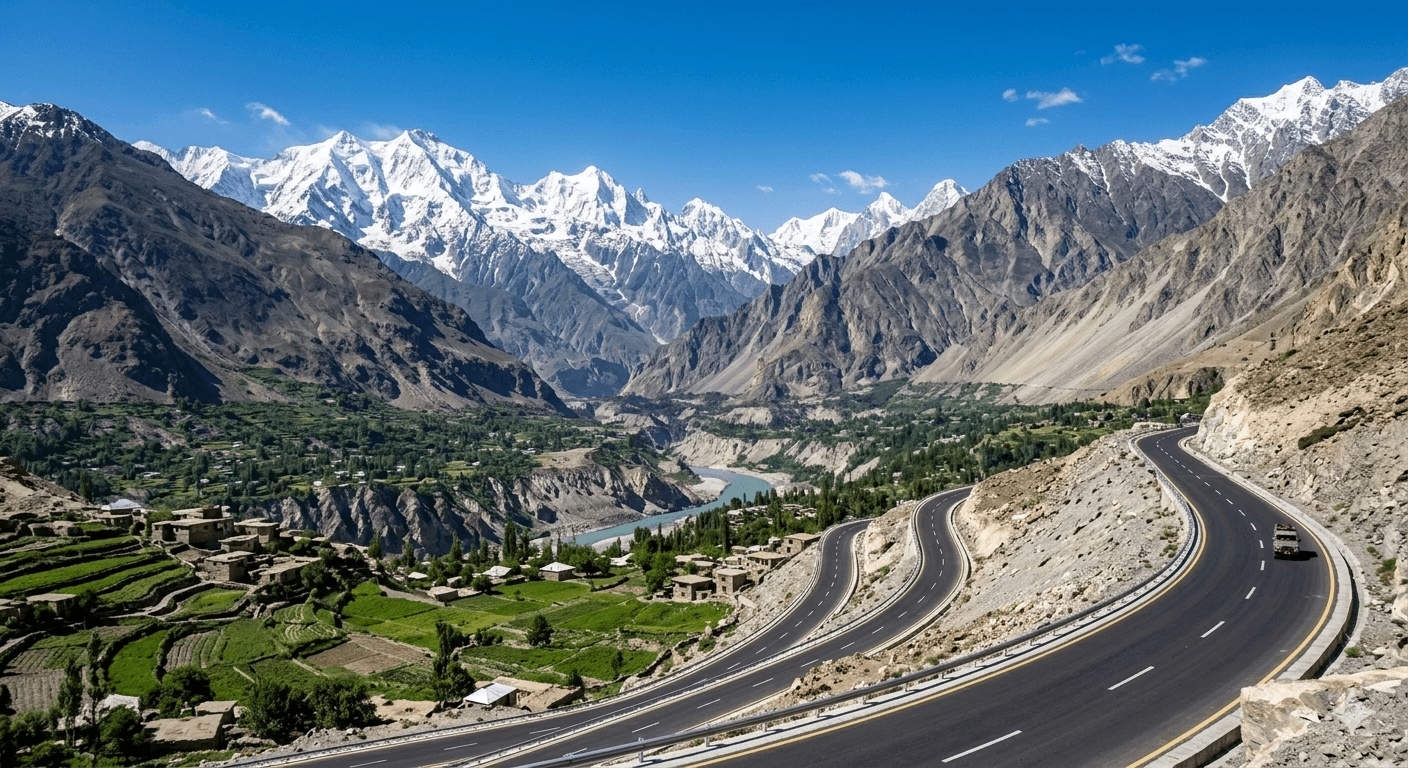
How to Reach Hunza Valley: The Ultimate Travel Guide
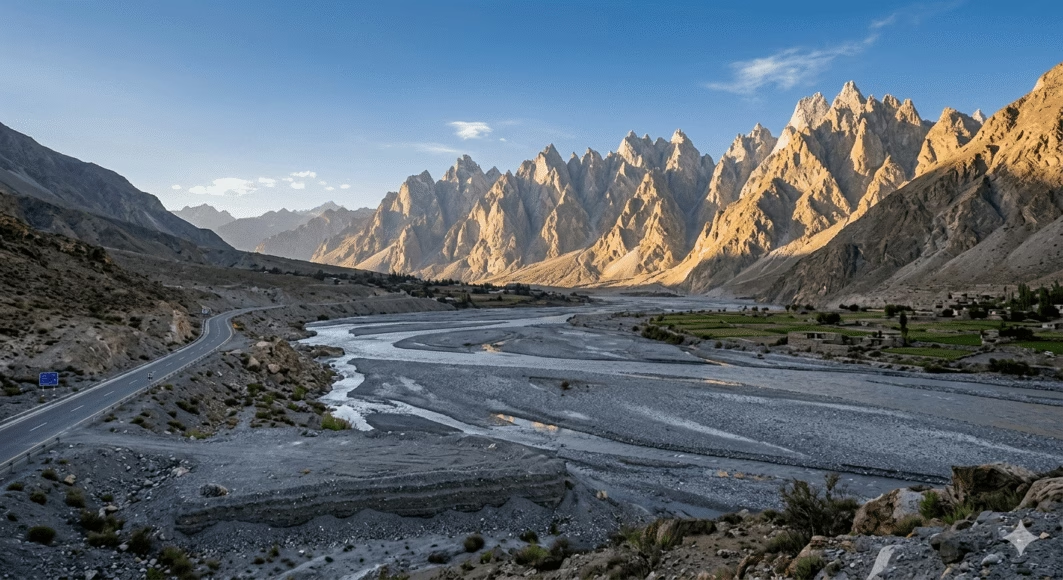
Tucked away amid the towering, snow-capped peaks of the Karakoram range, calculating the best route to reach Hunza Valley is no longer a daunting logistical challenge. Today, global travelers can access this spectacular alpine paradise with absolute ease. Specifically, you can choose between an incredibly scenic domestic flight or an epic road trip adventure along the legendary Karakoram Highway.
The journey time varies significantly based on your transportation choice. Consequently, the transit can take just an hour by air or stretch over a couple of days by road. To map out how this journey fits into a broader Northern Pakistan trip, we highly recommend checking out our comprehensive guide on how to create the perfect itinerary before finalizing your travel dates.
Whether you want to soar past majestic mountain peaks or navigate high-altitude curves, executing this trip seamlessly requires careful planning. If you prefer to leave the complex logistics to the experts, feel free to browse our curated, stress-free Hunza Valley Tours to find the best seasonal travel packages.
Air vs. Road Travel to Hunza: Quick Comparison
Before diving into the exact route details, here is the fundamental breakdown of what to expect when planning your journey:
- By Air (Approx. 1 Hour Flight + 2 Hour Drive): Flying is undoubtedly the fastest and most breathtaking option. It offers unparalleled aerial views of the mountain ranges. However, flights land at Gilgit Airport and are heavily dependent on clear mountain weather. Therefore, they are subject to sudden delays.
- By Road (12 to 22+ Hours): Driving is a rugged, unforgettable journey. It allows you to experience the dramatic transition of Pakistan’s landscapes. Depending on your route, you will definitely want to break the drive over two days to travel safely.
Hunza By Air: The Fastest Way to Paradise
Flying is the most convenient method to access the stunning deep valleys within the Northern Areas of Pakistan. While Hunza Valley itself does not host a commercial airstrip, travelers fly directly into Gilgit Airport (GIL). This terminal acts as the primary aerial gateway for the region. As a result, it cuts days of exhausting road travel down to mere hours.
Upon landing at the airport, the central hub of Hunza (Karimabad) is just a spectacular, fully paved 2-hour drive north along the breathtaking Karakoram Highway. You can read more about the historical significance of this region on Wikipedia’s Hunza Page.
Flight Durations from Major Hubs
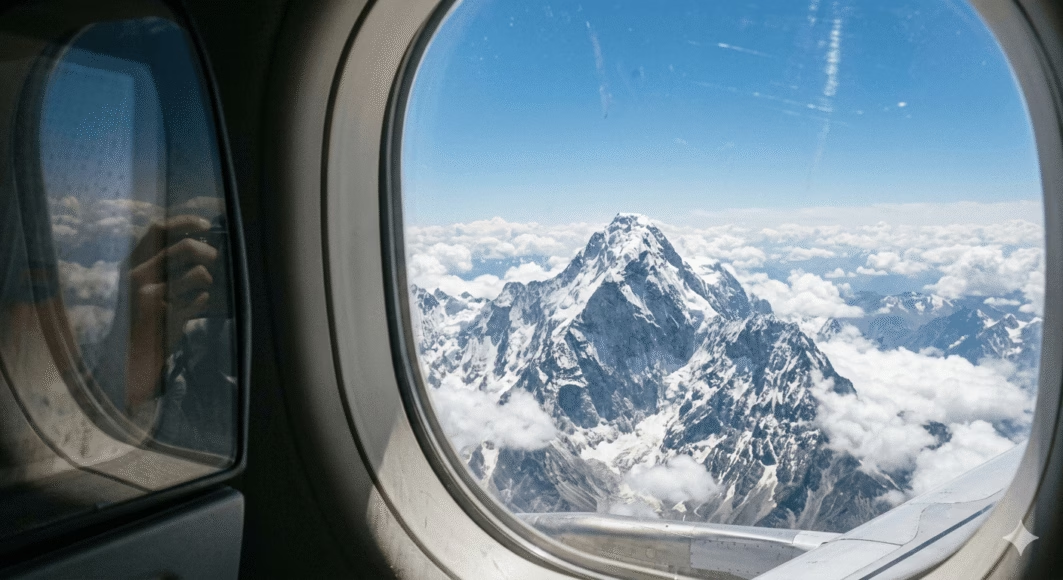
Regular direct flights connect major domestic hubs straight into the mountains. Flight durations vary depending on your departure city:
- From Islamabad: Approximately 1 hour of direct flight time via Pakistan International Airlines (PIA). Additionally, tourists can opt for direct flights from Islamabad to Skardu Airport via our comprehensive guide on how to reach Skardu and drive forward.
- From Other Cities (Lahore, Karachi, Multan, Faisalabad): The most efficient strategy is to catch a quick domestic flight to Islamabad (ISB). After that, you can connect directly onto an early morning flight heading north.
Bypassing long domestic transits to reach Hunza Valley directly has become a complete game-changer for overseas tourists. This option maximizes your holiday time in Karimabad, Attabad Lake and the Passu Cones.
Crucial Tip: Weather Disruptions & Layering
While flying is incredibly efficient, it comes with a major catch. Flights to Gilgit are strictly under Visual Flight Rules (VFR). This means planes can only operate on 100% clear weather days. If there is heavy cloud cover or low visibility over the mountain passes, your flight will be canceled instantly.
Because weather transitions rapidly from the scorching plains to the chilly mountain air, you should dress in smart layers on flight day. Make sure to review our ultimate packing checklist for visiting Northern Pakistan. This ensures you have a warm jacket readily accessible in your carry-on luggage.
Hunza By Road: Exploring the Legendary Routes
Embarking on a road trip to reach Hunza Valley is a true rite of passage for any adventurer. Modern motorways and newly carpeted highways have significantly smoothed out the journey. Furthermore, they reward you with some of the most dramatic canyon scenery on earth. There are two primary vehicular routes leading from Islamabad.
The 2 Main Road Routes from Islamabad
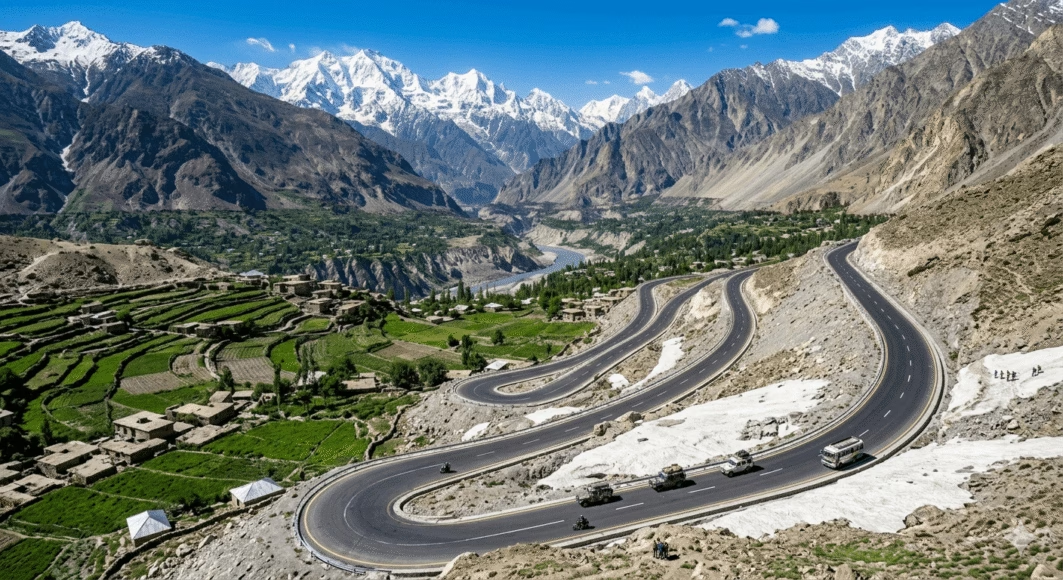
Choosing the right route depends heavily on the season you travel and whether the high-altitude Babusar Pass is open:
Route 1: The Scenic Naran-Babusar Corridor (Summer Only)
Route Sequence: Islamabad » Hazara Motorway (M-15) » Balakot » Naran » Babusar Top » Chilas » Gilgit » Karimabad.
This is the most popular summer tourist route to Hunza. It offers incredibly lush alpine landscapes and allows you to easily explore the best tourist attractions in the Naran Kaghan valley during your road trip.
Key Sightseeing Places Along the Naran Valley Route:
- Makra Peak Viewpoint: Spot the majestic mountain towering over the surrounding hills.
- Kiwai Waterfall: A famous stopover where clear mountain springs flow directly over roadside dining spots.
- Mahandri & Kaghan Glaciers: Witness massive sheets of seasonal roadside snowpacks and flowing streams.
- Suki Kinari Dam & Tunnels: View the impressive engineering of the mega hydropower infrastructure project along the Kunhar River.
- Naran Town & Sohani Waterfall: The central tourist hub of the valley, featuring a lively bazaar and nearby cascades.
- Batakundi & Pyala Lake: Take in the views of the unique circular, bowl-shaped alpine lake nestled in Jalkhad.
- Lulusar Lake: A massive, deep blue high-altitude mirror lake located just before the steep mountain climb.
- Babusar Top Pass: Stand at 13,691 feet to witness panoramic vistas of the surrounding mountain ranges.
- Nanga Parbat Viewpoint & 3M Junction: Spot the world’s 9th highest mountain and see the unique geographic point where the three mightiest mountain systems meet.
Top Activities to Enjoy on the Naran Route:
- Landscape & Travel Photography: Capture vibrant shots of winding roads, deep green valleys, and steep cliffs.
- Streamside Refreshments at Kiwai: Rest your feet in the ice-cold mountain water while enjoying local tea and snacks.
- Jeep Excursion to Shogran: Take a thrilling 4×4 ride up the steep pine-forested ridge to explore Shogran and Siri Paye Meadows.
- Boating at Lake Saif-ul-Malook: Rent a traditional wooden boat on the legendary high-altitude lake surrounded by Malika Parbat.
- Adventure Sports on Kunhar River: Experience adrenaline-pumping commercial ziplining and river rafting options situated just 5 km outside Naran town.
- High-Altitude Activities at Babusar Pass: Experience the high-velocity mountain zipline, short cycling tracks, and local hot food stalls at the summit.
Route 2: The Karakoram Highway Direct Line (Year-Round Route)
Route Sequence: Islamabad » Hazara Motorway » Abbottabad » Mansehra » Thakot » Besham » Dasu » Chilas » Gilgit » Karimabad.
This is the primary highway used during winter when the heavy snowpacks completely block the Babusar Pass route. If you are driving your own vehicle via this route, check our complete breakdown on taking a car to the Northern Areas of Pakistan safely.
Popular Sightseeing Spots Along the KKH:
- Thakot Bridge: Marvel at the beautiful architecture where the highway safely spans across the roaring Indus River.
- Besham & Dasu Canyons: Drive through rugged, towering gorges carved out by centuries of river flow.
- Chilas Zero Point: A central transit hub where travelers stop for fuel and to see ancient roadside rock petroglyphs.
- Raikot Bridge Peak View: Witness an incredible ground-up view of the massive Nanga Parbat massif framing the horizon.
- Junction of Three Great Mountain Ranges: Stand at the exact geographic point where the Himalayas, Karakoram, and Hindu Kush ranges converge.
- Rakaposhi Viewpoint (Ghulamabad): Stand directly beneath the sheer 7,788-meter face of Rakaposhi mountain while enjoying local cuisine.
Top Activities to Enjoy Along the Karakoram Highway:
- Rugged Mountain Photography: Document the legendary engineering of the highway contrasted against deep rocky deserts.
- Local Culinary Pitstops: Sample authentic local Pakistani food, fresh trout fish, and traditional chai at roadside dhabas in Besham and Chilas.
- Indus River Sightseeing: Enjoy watching the wild, muddy waters of the Indus flow parallel to the tarmac for hundreds of kilometers.
- Shopping at Gilgit City Bazaar: Stop by the historic central market to purchase local handicrafts, dry fruits, and traditional wool caps (Pakhols).
- Sunset Views at Rakaposhi: Capture stunning golden-hour photographs as the setting sun turns the snow peaks of Nagar and Hunza bright orange.
Vehicle Suitability: Can You Take a Standard Car to Hunza Valley?
One of the most frequent questions travelers ask is whether a standard sedan or hatchback can survive the journey. The short answer is yes. The Karakoram Highway (N-35) and the Naran-Babusar road (N-15) are fully asphalted, carpeted, and exceptionally well-maintained, meaning standard 1000cc to 1800cc family cars (like a Honda Civic, Toyota Corolla, or Suzuki Alto) can comfortably drive all the way to Karimabad, Passu, and even the Khunjerab Pass border.
However, you will face strict limitations if you plan to venture off the main highway. A standard car cannot access several iconic off-road viewpoints near the valley. You will strictly require a specialized 4×4 jeep or SUV for the following detours:
- Naltar Valley & Lakes: The track from NomAL into Naltar is incredibly rugged, rocky and completely unpaved.
- Hoper Glacier (Nagar): While manageable in dry weather, the final steep dirt tracks are safest with high ground clearance.
- Duikar Viewpoint (Eagle’s Nest): Accessible by cars but the extremely steep incline requires an experienced driver and a car with healthy brake pads and engine cooling.
Major Road Bottlenecks and Potential Travel Delays
While the drive to Hunza is breathtaking, your travel itinerary can face unexpected delays at a few known geographic chokepoints along the highway. When calculating your travel time from Islamabad keep these three factors in mind:
- The Dasu Dam Construction Zone (Kohistan): If you travel via the year-round Karakoram Highway route, the massive hydropower project construction near Dasu often results in slow-moving traffic, rough dirt detours, and occasional scheduled blasting closures. Budget an extra 1 to 2 hours of transit time for this stretch.
- Babusar Top Early Morning Congestion: During peak summer months (July and August), the Babusar Pass experiences heavy tourist traffic. Because the pass features steep hairpins and heavy vehicles moving slowly, crossing the summit between 11:00 AM and 3:00 PM can add significant delays. We recommend crossing early in the morning.
- The Babusar Security Night Closure: For safety reasons, local authorities frequently close the Babusar Pass route to incoming tourist traffic during night hours (typically from 6:00 PM to 6:00 AM). If you do not cross the checkpoints in time, you will be forced to spend the night in Naran or Chilas.
Public Transport Options: Bus Services to Hunza Valley
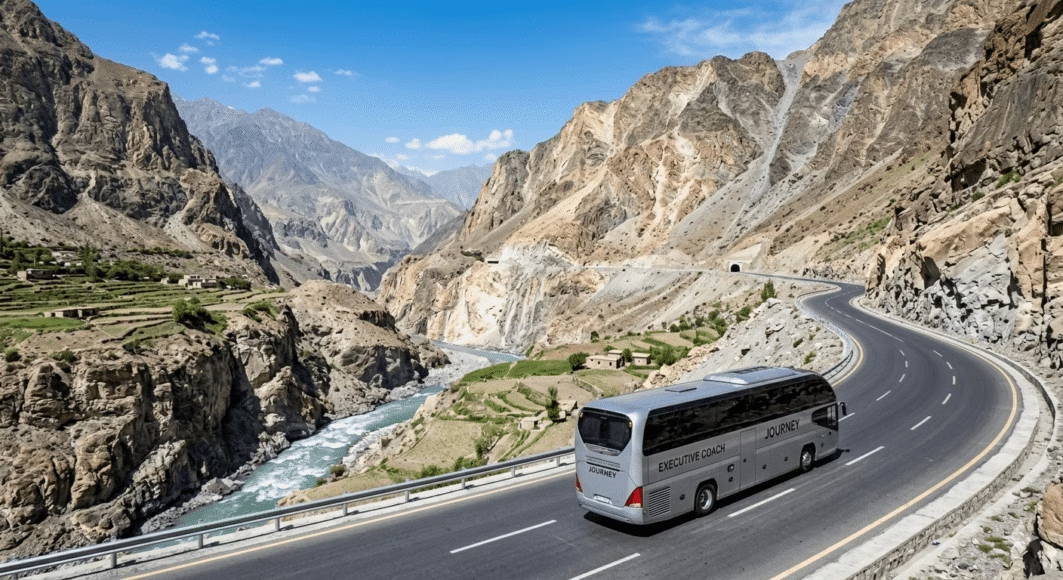
If you prefer to skip the stress of driving through mountain passes, traveling by bus is an incredibly reliable, safe, and cost-effective alternative. Daily luxury buses and coasters run directly from the Rawalpindi/Islamabad region up to Gilgit and Hunza via the Karakoram Highway.
The two premier bus operators handling this route are:
1. NATCO (Northern Areas Transport Corporation)
As the government-backed transport authority for Gilgit-Baltistan, NATCO runs the most consistent and vast network of vehicles. They offer both standard Daewoo buses and premium Yutong luxury liners.
- Departure Terminal: NATCO Main Terminal, Peer Wadhai, Rawalpindi.
- Average Travel Time: 14 to 16 hours to Gilgit; another 2 to 3 hours transfer to Hunza.
- Estimated Fare: Approximately Start From PKR 4,000 to PKR 4,600 per seat.
- Booking Tip: You can book seats online via portals like Bookme or call their Rawalpindi head office directly at (051) 9334556 for live departure updates.
2. Faisal Movers & Private Luxury Liners
For travelers looking for extra comfort, private companies like Faisal Movers and Silk Line operate executive and business-class setups equipped with air conditioning, charging ports and more frequent stops.
- Departure Terminal: Faizabad Interchange Terminal / Swan Garden Terminal, Rawalpindi.
- Destination: Most luxury liners drop passengers off at the main Jutial Bus Stand in Gilgit. From Gilgit, you can easily secure a 2-hour local Hiace coaster or private taxi directly into Karimabad, Hunza.
Pro Traveler Tip: Bus departures from Rawalpindi/Islamabad generally start late in the afternoon or evening (between 4:00 PM and 8:00 PM). This timing ensures the buses cross the difficult stretches of the Karakoram Highway or Babusar Pass during daylight hours the following morning. Always carry your original CNIC or Passport, as there are multiple mandatory security checkpoints along the route where security staff check passenger documents.
Mobile Network Connectivity & Internet in Hunza Valley
One of the most critical things to prepare for before heading up north is your mobile network coverage. Standard cellular signals from down-country network providers behave very differently once you cross into the Gilgit-Baltistan territory.
1. SCOM (Special Communications Organization) — The Absolute Lifeline
SCOM is the official state-backed telecom network operating specifically across Azad Jammu & Kashmir (AJK) and Gilgit-Baltistan (GB). It provides the widest, most stable geographic footprint in the region.
- Why you need it: SCOM is often the only network with a functioning voice and 3G/4G signal in remote mountain villages, deep valleys and high-altitude highway passes.
- How to get one: You can easily buy an SCOM tourist SIM card using your original CNIC (or Passport for foreigners) at official customer care centers in Gilgit City, Aliabad or Karimabad for a few hundred rupees.
2. Zong and Telenor 4G Availability
If you prefer not to purchase a new local SIM card, commercial networks have actively expanded their footprints into the main commercial hubs of the north:
- Main Town Hubs: Both Zong 4G and Telenor 4G offer strong, high-speed internet data coverage directly inside the main tourist towns such as Gilgit, Aliabad, Karimabad and Skardu.
- Remote Travel Gaps: While data speeds are great inside the main hotels and markets of Karimabad, the signal will rapidly drop back to basic 2G or vanish entirely the moment you leave town for deeper treks like Hoper Valley or Passu Cones.
Pro Traveler Tip: If you are a freelancer, remote worker or digital nomad relying on stable internet while staying in Hunza, always confirm that your hotel or guest house features a dedicated SCOM Fiber-Optic Wi-Fi connection before booking. Standard copper-wire or satellite broadband connections in the mountains can face frequent blackouts due to regional power load-shedding.
Travel from Gilgit to Hunza
If you are already exploring Gilgit city, the drive north to reach Hunza Valley covers approximately 100 kilometers along the spectacular Karakoram Highway. This smooth drive typically takes only 2 hours. Additionally, it passes through the historic Rakaposhi Viewpoint where you can stop for tea directly at the base of a 7,788-meter mountain wall.
Skip the Driving Stress: Rent a Car with Driver
Driving long hours on narrow, winding mountain curves requires extreme focus and local road experience. If you want to relax and enjoy the magnificent views with a professional mountain driver and a rugged, high-clearance vehicle, let us handle the logistics.
Explore our customized Hunza Valley Tour Packages or instantly Get a Free Private Luxury Car Quote for a dedicated Prado, BR-V, or Hiace Grand Cabin today!
Best Time to Travel & Seasonal Route Breakdowns
Because of its unique northern geography, Hunza Valley remains stunning all year round. However, your road conditions shift heavily with the seasons. The peak travel windows are Summer (June to September) for perfect trekking weather. Furthermore, Autumn (October to November) provides an unforgettable explosion of golden foliage across the valley orchards.
Spring brings beautiful white and pink blossom views across Karimabad. Conversely, winters turn the valley into a quiet, snow-covered wonderland. You must stick strictly to the Besham road route during these cold months to safely reach Hunza Valley.
Babusar Top Seasonal Opening Notice (2026 Road Condition)
If you plan on taking the scenic route through Naran, please note that Babusar Top is a highly seasonal pass. Due to heavy winter snowpack over 13,600 feet, the pass remains completely closed to all traffic for nearly half the year.
Every year, heavy machinery works to clear the pass for the summer tourist flow. While snow clearance efforts usually begin in May, the pass traditionally opens up for daylight traffic between late May and June 10th. It remains fully accessible throughout the summer until around mid-October, when the winter blizzards return. Always check live road updates before attempting to drive this route.
Distance and Travel Times from Major Cities
Before starting your journey, it is vital to map out the exact distance and driving endurance required from your province. Below is the comprehensive provincial breakdown of distances to help you plan your itinerary perfectly.
Islamabad to Hunza (Karimabad): 600 km, taking approximately 12–14 hours driving time via Babusar Pass.
Punjab Routes and Distances ▼
Travelers from Punjab can easily connect via the main motorways straight onto the Hazara Motorway corridor at Hasan Abdal.
- Murree to Hunza: 540 km, taking approximately 11–13 hours. You can combine this with our premium Murree Tour Packages.
- Rawalpindi to Hunza: 580 km, taking approximately 12–14 hours driving time.
- Sialkot to Hunza: 770 km, taking approximately 15–17 hours driving time via the motorways.
- Gujrat to Hunza: 780 km, taking approximately 15–17 hours driving time.
- Gujranwala to Hunza: 820 km, taking approximately 16–18 hours driving time.
- Sargodha to Hunza: 850 km, taking approximately 17–19 hours driving time.
- Lahore to Hunza: 1,020 km, taking approximately 19–21 hours driving time. (Highly recommended stopover: Naran or Besham)
- Faisalabad to Hunza: 1,080 km, taking approximately 20–22 hours driving time.
- Multan to Hunza: 1,190 km, taking approximately 22–24 hours driving time.
- Bahawalpur to Hunza: 1,280 km, taking approximately 24–26 hours driving time.
- Rahim Yar Khan to Hunza: 1,470 km, taking approximately 27–29 hours driving time.
Sindh Routes and Distances ▼
Driving from Sindh is an epic cross-country transit via the motorways. We strongly recommend breaking this journey into a 3-day trip with overnight stops to ensure absolute road safety.
- Sukkur to Hunza: 1,500 km, taking approximately 25–27 hours driving time.
- Larkana to Hunza: 1,570 km, taking approximately 27–29 hours driving time.
- Nawabshah to Hunza: 1,690 km, taking approximately 29–31 hours driving time.
- Mirpur Khas to Hunza: 1,880 km, taking approximately 32–34 hours driving time.
- Hyderabad to Hunza: 1,900 km, taking approximately 32–34 hours driving time.
- Karachi to Hunza: 2,000 km, taking approximately 33–35 hours driving time. (Consider booking a flight to Gilgit to bypass road exhaustion)
KPK Routes and Distances ▼
KPK acts as the direct geographic gateway to Gilgit-Baltistan. Most cities here connect rapidly via the Hazara Expressway or the seasonal Kaghan Valley route.
- Naran Valley to Hunza: 300 km, taking approximately 7–8 hours. Check our exclusive Naran Kaghan Tour Packages.
- Kaghan to Hunza: 325 km, taking approximately 8–9 hours driving time via Babusar Top.
- Mansehra to Hunza: 440 km, taking approximately 8.5–9.5 hours driving time.
- Haripur to Hunza: 460 km, taking approximately 9–10 hours driving time.
- Abbottabad to Hunza: 470 km, taking approximately 9–10 hours driving time.
- Nowshera to Hunza: 590 km, taking approximately 11–13 hours driving time.
- Swabi to Hunza: 600 km, taking approximately 11–13 hours driving time.
- Mardan to Hunza: 610 km, taking approximately 12–14 hours driving time.
- Peshawar to Hunza: 670 km, taking approximately 13–15 hours driving time.
- Mingora to Hunza: 680 km, taking approximately 13–15 hours. Explore the region further with our Swat Valley Tour Packages.
- Kohat to Hunza: 740 km, taking approximately 14–16 hours driving time.
Azad Kashmir Routes and Distances ▼
Travelers from Azad Jammu and Kashmir can head through the scenic link roads toward Mansehra or trace down toward the Islamabad junctions.
- Muzaffarabad to Hunza: 460 km, taking approximately 9.5–11 hours driving time via the direct link road.
- Bagh to Hunza: 540 km, taking approximately 11–13 hours driving time via Kohala.
- Rawalakot to Hunza: 565 km, taking approximately 11–13 hours driving time.
- Kotli to Hunza: 670 km, taking approximately 13–15 hours driving time.
- Mirpur to Hunza: 725 km, taking approximately 14–16 hours driving time.
- Bhimber to Hunza: 760 km, taking approximately 15–17 hours driving time.
Gilgit-Baltistan Internal Regional Distances ▼
If you are already based inside Gilgit-Baltistan, internal transits to reach Hunza Valley are smooth and highly accessible via the primary highway corridor.
- Gilgit City to Hunza: 100 km, taking approximately 2 hours driving time via a fully carpeted highway.
- Nagar to Hunza: 15 km, taking approximately 20 to 30 minutes driving time right across the river valley.
- Attabad Lake to Hunza: 30 km, taking approximately 45 minutes driving time heading north.
- Passu Cones to Hunza: 50 km, taking approximately 1 hour driving time.
- Chilas to Hunza: 230 km, taking approximately 4.5 to 5 hours driving time via KKH.
- Gahkuch (Ghizer) to Hunza: 170 km, taking approximately 3.5 to 4 hours driving time.
- Astore to Hunza: 210 km, taking approximately 4.5 to 5.5 hours driving time.
- Skardu to Hunza: 350 km, taking approximately 6.5 to 7.5 hours. Combine this with our premium Skardu Valley Tour Packages.
Balochistan Routes and Distances ▼
Road travel from Balochistan requires transiting through upper Sindh or Punjab via national highways before joining the primary northern motorway lines.
- Sibi to Hunza: 1,460 km, taking approximately 26–28 hours driving time.
- Loralai to Hunza: 1,490 km, taking approximately 27–29 hours driving time.
- Quetta to Hunza: 1,590 km, taking approximately 28–30 hours driving time.
- Ziarat to Hunza: 1,620 km, taking approximately 29–31 hours driving time.
- Chaman to Hunza: 1,710 km, taking approximately 30–32 hours driving time.
- Kalat to Hunza: 1,730 km, taking approximately 30–32 hours driving time.
- Khuzdar to Hunza: 1,830 km, taking approximately 31–33 hours driving time.
- Hub to Hunza: 1,990 km, taking approximately 34–36 hours driving time.
- Gwadar to Hunza: 2,310 km, taking approximately 37–39 hours driving time.
- Turbat to Hunza: 2,330 km, taking approximately 38–40 hours driving time.
Frequently Asked Questions About Reaching Hunza
1. What is the fallback option if my flight to Gilgit gets canceled?
If your flight from Islamabad to Gilgit gets canceled due to mountain weather conditions, the automatic backup option is to travel by road. You can hire a private vehicle or use dedicated NATCO bus services via the Karakoram Highway (KKH). Because cancellation frequencies fluctuate with weather changes, we always recommend building one buffer day into your travel plan to comfortably reach Hunza Valley.
2. Can I drive a standard car all the way to Hunza?
Yes, standard sedan cars can safely travel from Islamabad straight to Hunza because both the Karakoram Highway (N-35) and the Naran-Babusar route (N-15) are fully asphalted and carpeted. However, you should drive carefully through the active construction patches near the Dasu Dam project. Note that off-road jeep tracks strictly require high-clearance 4×4 vehicles.
3. Is it safe to drive along the Karakoram Highway at night?
Night driving on the high mountain roads leading to Hunza is strongly discouraged for tourists. These highways lack extensive overhead street lighting, landslides can occur unexpectedly and large cargo trucks heavily utilize the lanes overnight. Therefore, it is best to travel exclusively during daylight hours and plan a relaxing overnight stay in Besham or Naran to stay refreshed.
4. How far is Attabad Lake from Karimabad, Hunza?
Attabad Lake is located roughly 30 kilometers north of Karimabad. Driving between the two iconic spots takes approximately 45 minutes along a spectacular section of the Karakoram Highway. This road cuts directly through several highly engineered, lit mountain transit tunnels.
5. What are the bus options from Islamabad to Hunza?
The most popular public transport from Islamabad to reach Hunza Valley is the government-operated NATCO bus service, which travels along the Karakoram Highway daily. Premium private lines like Faisal Movers also offer daily luxury buses to Gilgit city. From there, you can easily transition to a local hiace for the final 2-hour drive up to Hunza Valley.